Where brokenness becomes beauty
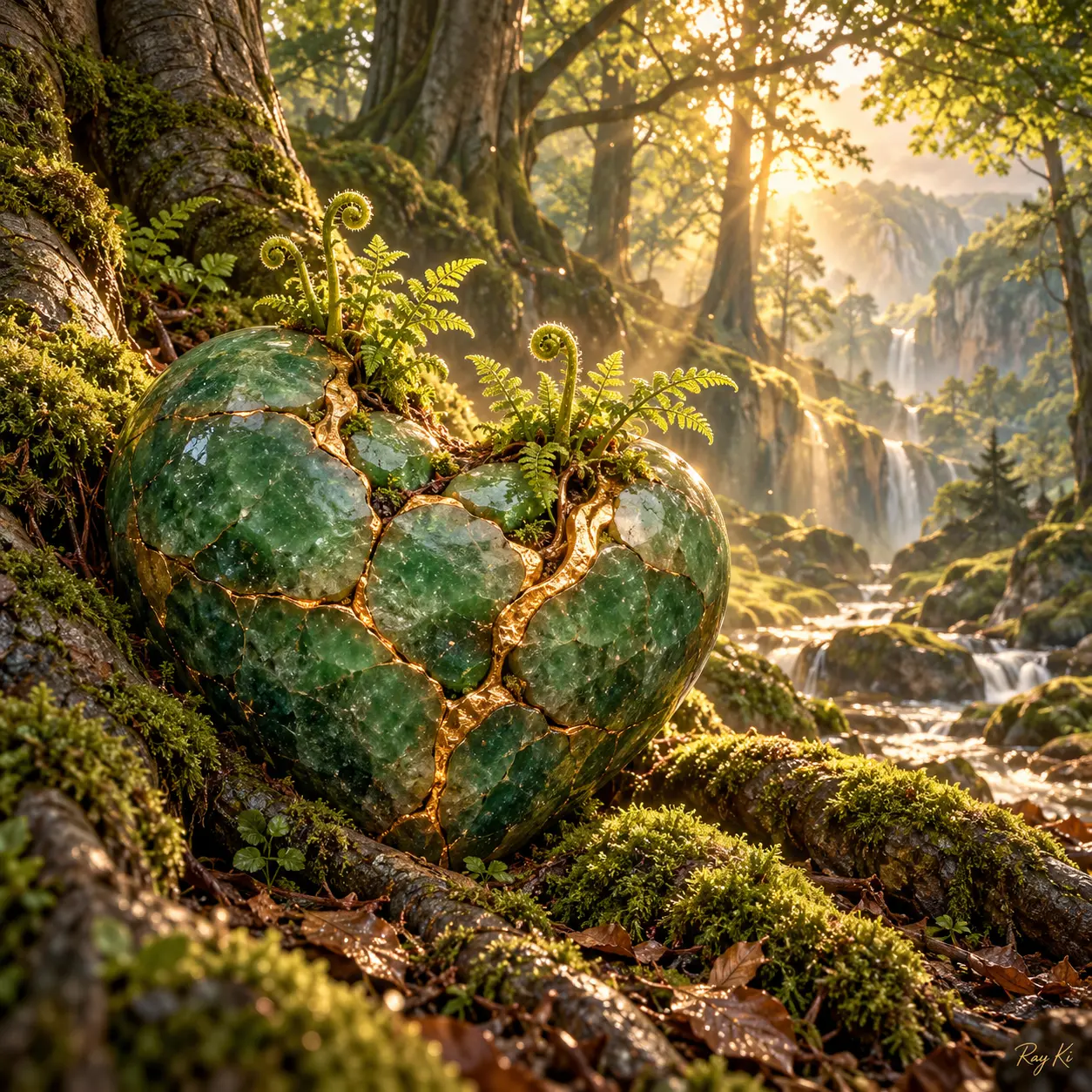
Healing Flower Hearts is an evolving RayChiCALLS art collection by Ray Brockotter. It brings gemstone hearts, flowers, natural settings and affirmations together as visual invitations to reflect on healing, peace and reconciliation.
Beauty that makes room for the whole story
Every heart carries a story: joy, loss, courage, change and renewal. The collection begins with a possibility: what has been wounded may also become a place where compassion and new life take root.
The golden seams draw inspiration from kintsugi, the Japanese practice of repairing broken pottery with gold. Rather than concealing the cracks, kintsugi makes them part of the object’s visible history. In these artworks, the golden lines suggest transformation, acceptance and the wisdom that can emerge through experience. The heart is not returned to an imagined perfect state; its marks remain part of its beauty.
Gemstones evoke the Earth’s depth, endurance and changing forms. Flowers speak of life unfolding, blossoming, releasing and beginning again. Together, they create a visual conversation between strength and tenderness, permanence and change, Earth and spirit.
A moment of reflection
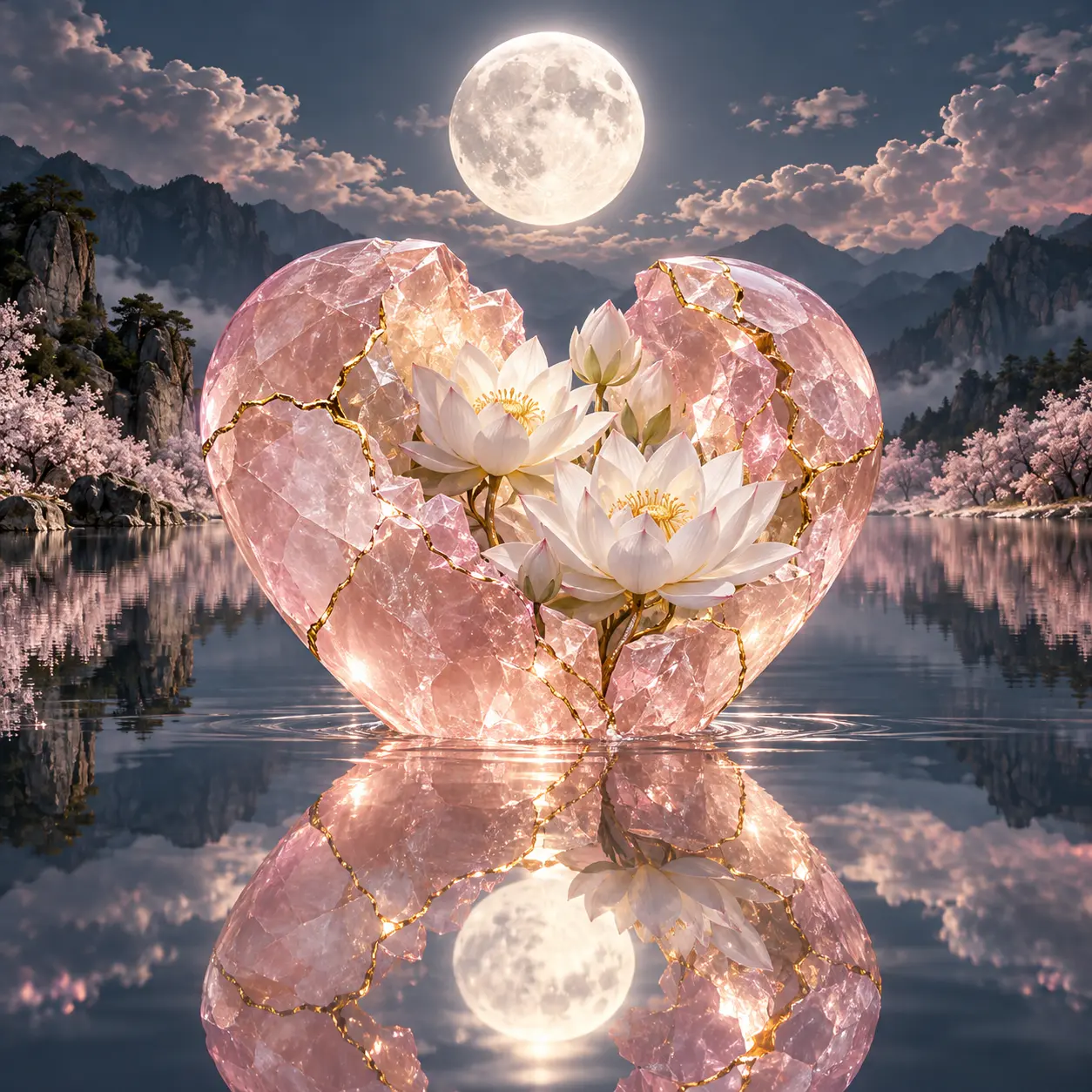
Each artwork pairs its visual story with a short affirmation. The words are not a demand to feel positive or a promise that circumstances will change. They invite a pause: notice what resonates, adapt the words if you wish, or leave them aside.
“I am a vessel of divine peace, eternally renewed.”
An affirmation can be read quietly, adapted to your own words, or simply left aside. There is no single right response to an image.
Art as an invitation to care
The collection reflects the RayChiCALLS intention to bring healing, peace and reconciliation into our relationships with ourselves, one another and the living Earth. Flowers suggest the patience of renewal; golden lines honour what has been lived; landscapes remind us that we belong to a wider living world.
Some works are accompanied by the Blue Earth intention: “I direct this energy of Reiki to heal and reconcile Planet Earth and all its inhabitants.” Here it is an expression of spiritual practice and care—not a medical treatment or a promise of a particular outcome. The imagery also points toward practical choices: kindness in daily life, responsibility toward one another and care for the natural world.
How the artworks take shape
Each piece begins with an intention or theme—perhaps courage, forgiveness, inner peace, renewal or connection with the Earth. A gemstone is chosen for its visual character and symbolic associations. Its heart is imagined with visible fractures and golden seams; a flower or other botanical form grows from within it, carrying the theme into the image.
The heart then finds its setting: perhaps a forest, mountain, ocean, desert at sunrise or a star-filled sky. Colour, light, texture and perspective bring the elements together. AI supports the image-making process, while the concept, symbolism, affirmation and artistic direction give each piece its particular focus.
RayChiCALLS describes the visual approach as 6D-inspired: a creative direction for layered depth, sculptural forms, rich textures, atmospheric light and an immersive sense of presence.
Why affirmations matter
An affirmation gives the image a personal voice. It can help a viewer name a quality the artwork evokes—such as courage, compassion or renewal—and offer a point of reflection.
For example, “My spirit transforms pain into radiant power” might accompany an image of a dark gemstone heart, repaired with gold and opening into vivid flowers. The words do not ask anyone to deny pain or force a positive feeling. They offer one possible way to meet the image with awareness and care.
Inner reflection and care for the Earth
Healing Flower Hearts also draws on nature’s capacity for change and renewal. Forests regenerate, flowers return after winter and rivers continually shape their surroundings. These images can remind us that acknowledging harm may be a beginning: renewal also asks for patience, nourishment and responsible action.
The collection invites reflection on how our relationships with ourselves and one another meet our relationship with the Earth. Its art does not claim to repair ecosystems or resolve conflict; it offers a visual space in which compassion, responsibility and connection can be considered.